Radiators have traditionally occupied a discreet place in homes, generally beneath windows or against walls, with the limited function of providing heat during the colder months. However, the evolution of climate control systems is expanding their possibilities. New thermal emitters can combine heating, cooling and architectural integration, an approach developed by Dikov&Vo through solutions made to measure for each space.
The company offers an alternative to the conventional radiator: units capable of operating throughout the year and adapting to both the thermal needs and aesthetic characteristics of a home. Its work encompasses the design, manufacture, installation and commissioning of these systems.
One unit for different seasons
One distinctive feature of the emitters developed by Dikov&Vo is their ability to operate with hot water in winter and cold water in summer, when integrated into compatible installations, such as those based on air-source heat pumps.
Depending on the characteristics of the unit and the needs of each room, air can circulate through natural convection or forced ventilation. Some configurations can also incorporate ventilation and filtration functions.
This versatility addresses a practical issue: using a single element to meet different climate control needs, although its performance depends on factors such as water temperature, ambient conditions and the sizing of the installation.
When climate control also becomes part of interior design
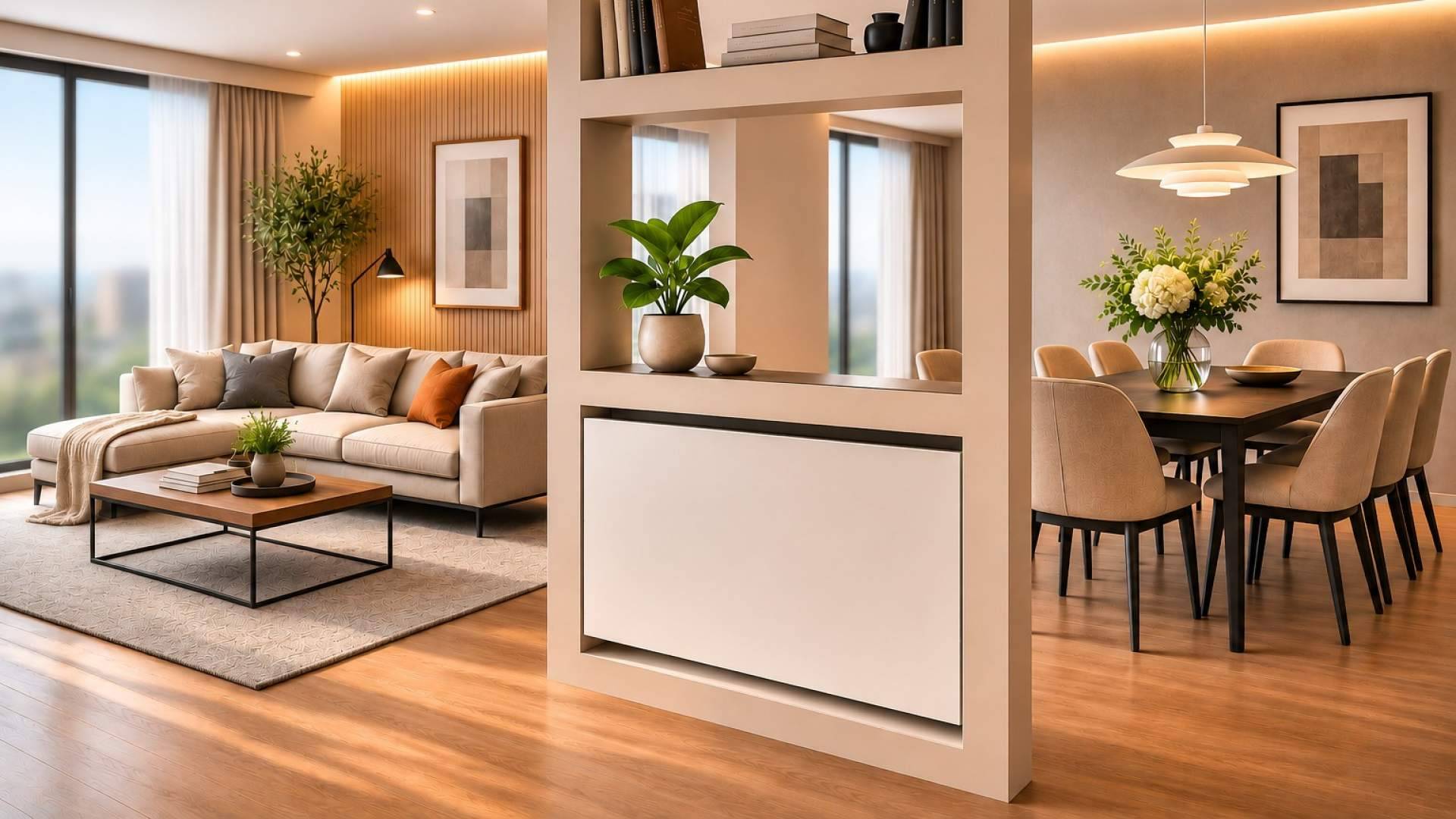
Aesthetic integration is another aspect of this evolution. Unlike conventional models, which often constrain furniture placement, custom radiators allow solutions to be tailored to the existing architecture.
Dikov&Vo manufactures vertical, horizontal, recessed and partially recessed emitters, as well as configurations specifically designed for bedrooms, living rooms, bathrooms and workspaces.
The process begins with an assessment of each room, aiming to reconcile climate control needs with design choices. In this way, the emitter can go from being an element that people try to conceal to becoming part of the interior composition.
Energy efficiency depends on the entire installation
The adoption of technologies such as air-source heat pumps has also drawn attention to the relationship between the different components of a thermal installation.
The building's insulation, operating temperature, emitters and control systems all influence energy consumption. Choosing an efficient energy source alone therefore does not guarantee that the entire installation will perform as expected.
With this in mind, Dikov&Vo develops its radiators with consideration for both their architectural integration and their compatibility with the planned thermal systems.
The trend points towards homes where climate control and architecture are planned together, rather than deciding where to place radiators after the design is complete.