
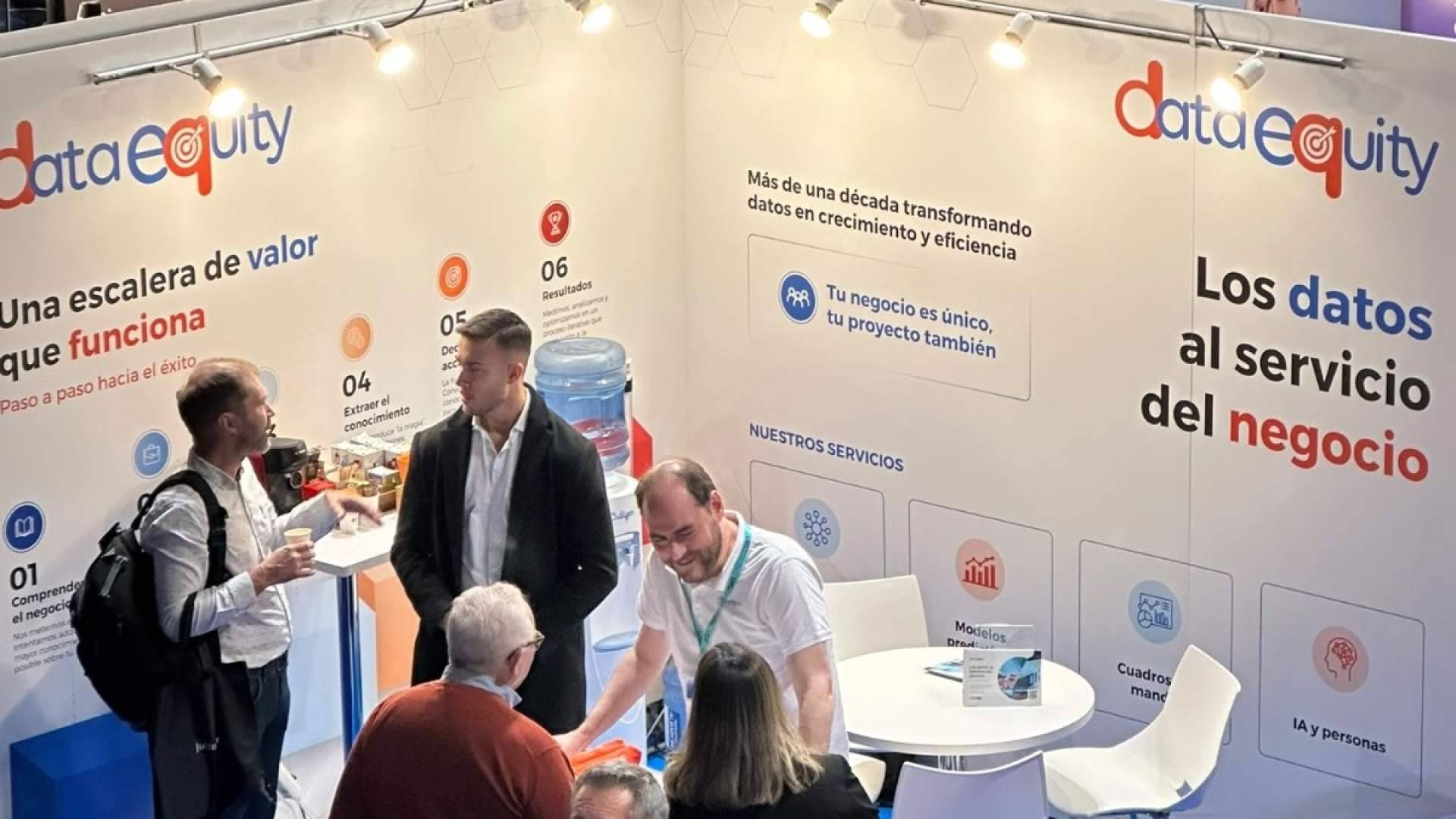
The amount of information companies store does not always translate into a better understanding of their customers or better decisions. That gap between having data and knowing how to use it was central to the approach that Data Equity brought to Madrid Tech Show, held on November 4 and 5 at IFEMA Madrid, where the company took part to show how analytics can help identify business opportunities.
The event brought together professionals and companies from fields including artificial intelligence, big data, cybersecurity and digital transformation. Among the participants was Eduardo Suela, an entrepreneur with ties to Talavera de la Reina, who presented the approach of Data Equity to making use of business information.
From storing information to making business decisions
One of the problems Data Equity addresses is the difficulty of turning large volumes of information into useful conclusions. A company may know how much its customers buy, how often they do so or which products they prefer, but those records take on a new dimension when they make it possible to identify patterns and anticipate behavior.
The company works with advanced segmentation tools, predictive models and dashboards that help interpret that information. Its approach seeks to connect analysis with specific decisions: which customers need more attention, where to focus sales resources or how to adapt strategies to different consumer profiles.
Segmentation plays a prominent role in this process. Rather than treating the entire customer base as a homogeneous group, it makes it possible to distinguish groups with different characteristics and needs, information that can be relevant when planning campaigns and personalizing business relationships.
The challenge of turning technology into results
Data Equity’s participation in Madrid Tech Show also highlighted an issue that goes beyond technological tools: the need for reliable, well-structured data before applying advanced artificial intelligence solutions.
This approach places the business challenge beyond simply adopting new technologies. The real difficulty lies in integrating information into everyday processes and ensuring that it influences decisions. This transformation depends as much on analytical capabilities as on how organizations use what they already know.