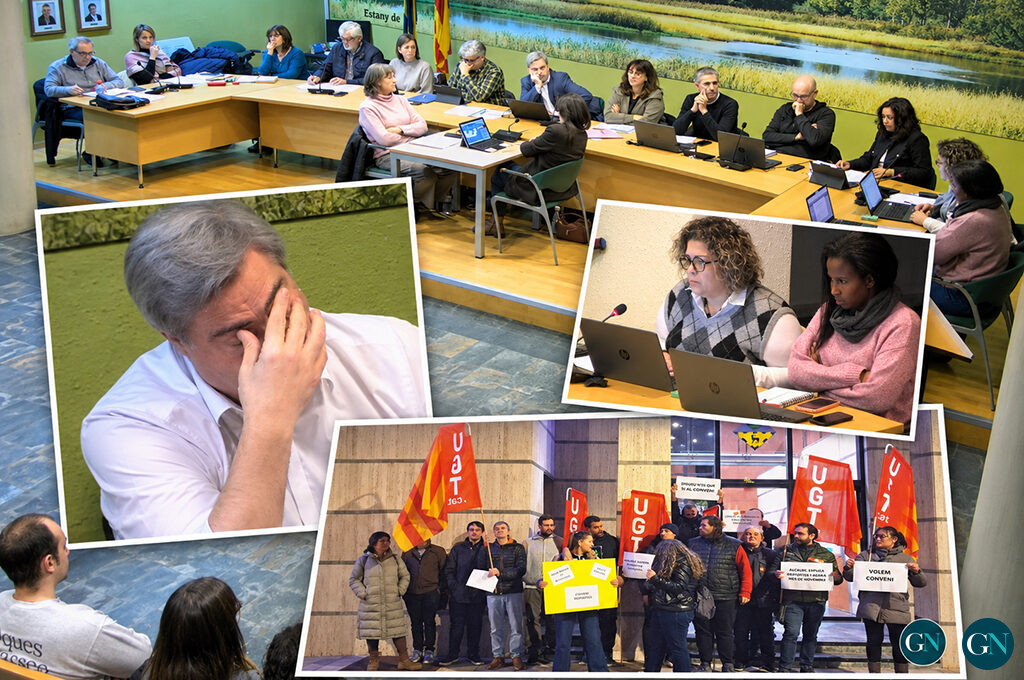


Eduard Colomé is governing in a minority in Sils. Non-affiliated councillors Alba Mora Tura and Gina Baldeh Mballo announced their departure from the governing coalition during the council meeting on Thursday, 26 November, in the same debate in which the mayor lost the vote on the 2027 budget. The split leaves the administration with five of the council’s thirteen councillors: four from Junts and one from FEM.
The budget received five votes in favour, six against and two abstentions. Junts and FEM supported it. The four Independents per Sils councillors, the Sils en Comú councillor and the PSC councillor voted against it. Mora and Baldeh abstained. Speaking on behalf of both, Mora said they had asked for the vote to be postponed to give them more time to study the budget. The request was unsuccessful.
“We have faced coercion and disrespect”
Mora opened her remarks with a direct criticism of Colomé’s governing style: “This is a municipal coalition government, not an absolute majority for the mayor’s political party”. According to the councillor, the administration had allocated resources for some of their demands but had not negotiated with them how they would be put into effect. She also questioned proposed pay rises for the financial controller and council secretary posts while the rest of the staff’s demands remained unresolved.
Mora’s strongest criticism came when she described what had happened within the coalition. “We have been invited to leave the government on several occasions. We have faced coercion and disrespect”, she said. The councillor also alleged that “lies have been used to apply pressure” about the consequences of extending the existing budget. She maintained that the council has mechanisms to amend budget allocations and continue processing grants.
Mora then announced that the two councillors’ abstention would be accompanied by their departure from the administration. “We are leaving the government, but we will not leave the town”, she said. Following the decision, Colomé will have to seek support beyond Junts and FEM if he wants to pass a new budget proposal.
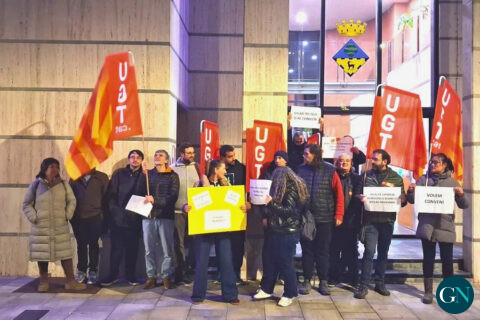
Union protest outside the town hall
The split came as union representatives protested outside the town hall over the situation facing staff. Inside, the council passed an emergency motion submitted by Independents per Sils, Sils en Comú, the PSC and the two non-affiliated councillors. The agreement gives the administration 30 days to present a timetable of actions specifying who will be responsible, what resources will be used and the deadlines.
The measures include a review of the staffing plan, a protocol for covering absences and vacancies, and a specific plan for the local police. The UGT union also noted that the mayor had pledged to respond to staff demands before the end of November.
Water dispute pits Colomé against opposition leader
The debate over water sparked another conflict at the council meeting. Martí Nogué, the opposition leader, criticised Colomé for not warning residents after the detection of metolachlor ESA, which the councillor said occurred on 9 October. A mayoral decree cites a “public health emergency” as justification following an increase in the compound in the municipal water supply. According to Nogué, the test recorded 0.135 micrograms per litre, a concentration equivalent to 5.4 times the reference value of 0.025 that he cited.
Colomé argued that it was Public Health’s responsibility to issue instructions and denied that the council had disregarded any. “Find me a Public Health order telling me to cut off the water supply”, he replied. The exchange descended into personal recriminations. The mayor asked Nogué, “Why are you so bad-tempered?” and even told him: “Come to the council meeting and don’t ask me questions”.
The underlying disagreement remains unresolved. Nogué questions why residents were not informed and is demanding all test results since 9 October to establish when levels returned to regulatory limits. Colomé defends the council’s actions, arguing that Public Health instructions were followed. The known excerpt of the decree confirms that levels were non-compliant at the time of the incident, but does not establish the current state of the water.