Peaches is advancing a new generation of regenerative therapies with the potential to reduce costs, facilitate industrial production and expand patient access. It estimates that the first biologic medicines based on this technology could reach the market within three years. The fifth UAM-PEACHES Chair conference brought together researchers and healthcare experts to examine the potential of secretomes as an alternative to therapies based on administering cells.
Peaches Biotech is strengthening its commitment to a new generation of biologic medicines with its patented PRS (Selective Rich Plasma) technology platform, based on targeted secretomes and with a potential portfolio of up to 25 products. This technology represents a further step in the evolution of regenerative therapies: harnessing the therapeutic potential of cells without having to administer the cells themselves to the patient.
Compared with conventional cell therapies, targeted secretomes offer advantages in terms of production costs, industrial scalability, storage and distribution. These characteristics could facilitate their commercial development and expand patient access to this type of treatment.
Its most advanced product, PRS CK STORM, which targets respiratory conditions, is already in phase I-II clinical trials. According to the company, this progress puts Peaches approximately five years ahead of other projects in the field and strengthens its position in the development of medicines based on targeted secretomes.
From innovation to market: more accessible medicines
The secretome consists of the signals and molecules released by stem cells in response to their environment, which play a role in the repair and regeneration of damaged tissues. These biological messages can be collected, isolated and selected to develop new biologic medicines capable of reproducing the therapeutic effects of stem cells without administering the cells themselves.
In this respect, the targeted secretome production model proposed by Peaches would facilitate large-scale manufacturing and simplify the logistics associated with these medicines.
The company estimates that its first biologic medicines could reach the market in approximately three years, a goal that would mark a significant milestone in its business development.
"Secretome-based therapies could open a new chapter in regenerative medicine and become an alternative to cell therapies for numerous conditions in which great therapeutic hopes had been placed. We are looking at the world's first immunomodulatory medicine based on targeted secretomes, an advance that could take regenerative medicine to a new dimension. Beyond their clinical potential, these therapies offer key advantages for their development and application on a large scale, such as lower costs and easier storage and distribution. These factors could help make them accessible to more patients and allow them to be applied to more diseases," says Juan Carlos de Gregorio, CEO of Peaches Biotech.
Collaboration to advance the development of new therapies
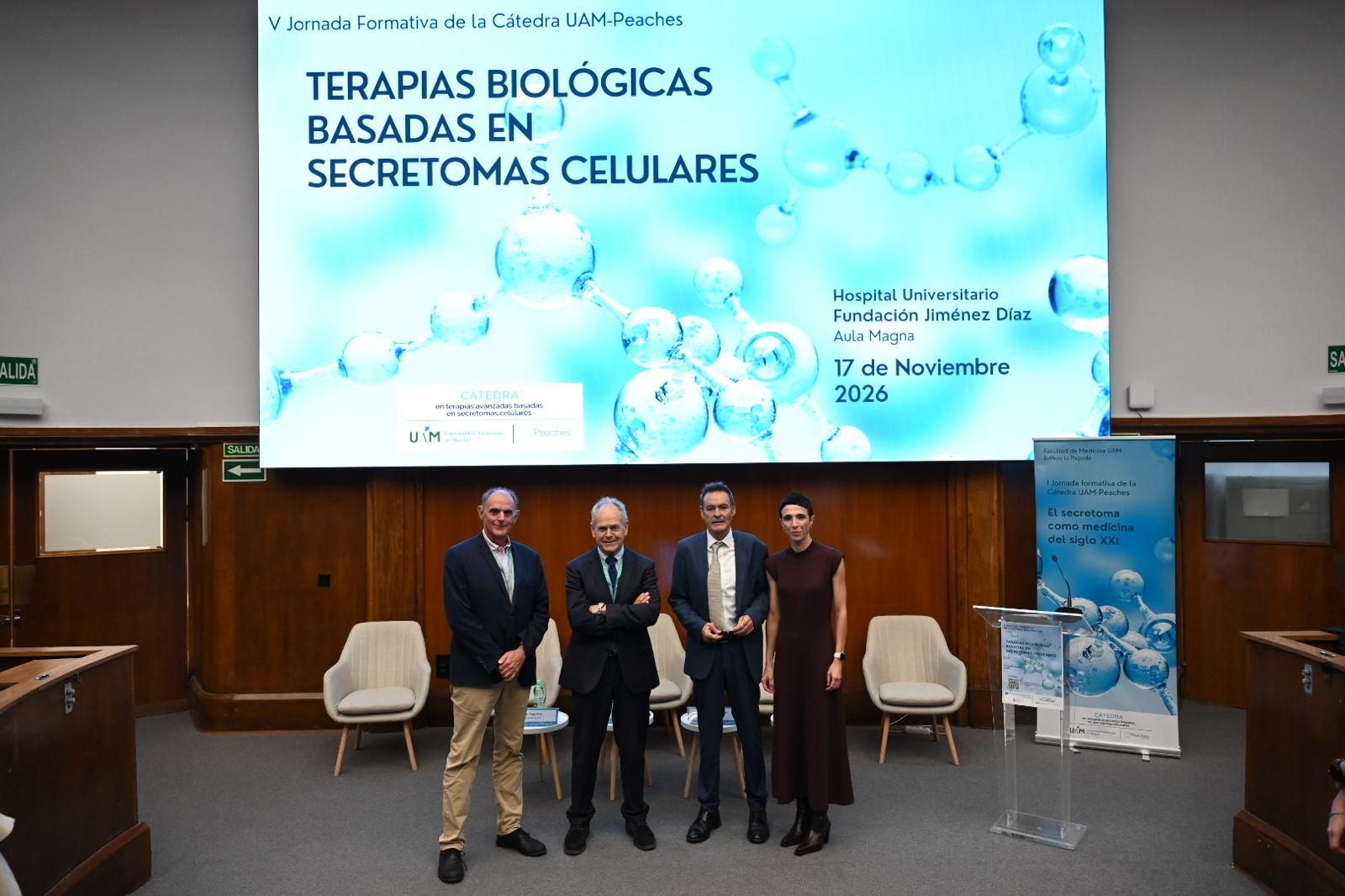
The potential of secretomes as the future of cell biology and their application in new areas of medicine were among the main topics at the fifth conference of the UAM-PEACHES Chair, held recently at Fundación Jiménez Díaz University Hospital. It brought together researchers, healthcare professionals and experts to share advances and explore new opportunities in the field.
The conference addressed topics including the use of secretomes in nerve regeneration for conditions such as multiple sclerosis and stroke, expanding the potential applications of these therapies in nervous system repair.
In the same area, Peaches presented its progress on PRS Neuropain, a product in development for chronic neuropathic pain, a condition with significant unmet medical needs and a major impact on patients' quality of life and ability to work.
The platform also has two other development programmes: PRS MioBoost, aimed at repairing and regenerating muscle injuries, and PRS Osteo, focused on bone regeneration after fractures and dental procedures.
These projects reflect the versatility of PRS and its ability to address different therapeutic areas using a single technology platform, expanding opportunities for the development and future commercialisation of new biologic medicines.
Francesca Sarno, Peaches' research director, explains: "our goal is not to replace cell therapies by simplifying biology, but to capture the therapeutic signals released by cells and turn them into a more democratised product, accessible to a wider patient population, thereby reducing the economic and social impact of many diseases".
For Peaches, the challenge now is to advance clinical development and bring these products closer to market, contributing to a new generation of medicines that combines therapeutic innovation, industrial viability and greater accessibility for patients.
About Peaches Biotech Group
The group focuses on creating medicines based on advanced therapies, particularly secretomes, collections of cytokines obtained from the communication between stem cells and cells from different tissues, or T-cell re-education. These medicines will enable patients to benefit from new therapeutic options that have a lower economic impact on the healthcare system, are more accessible to patients and easier for clinical professionals to handle, and break with current models.